Galvanized Coil
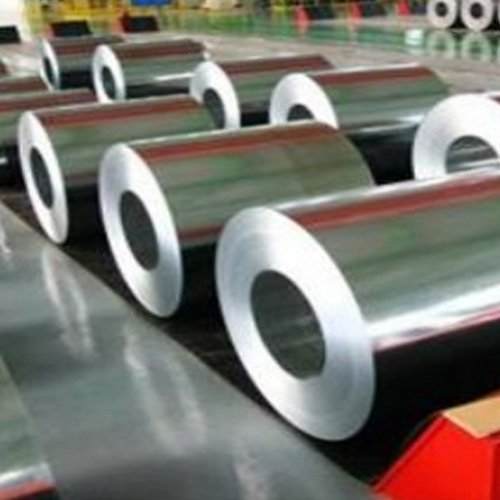
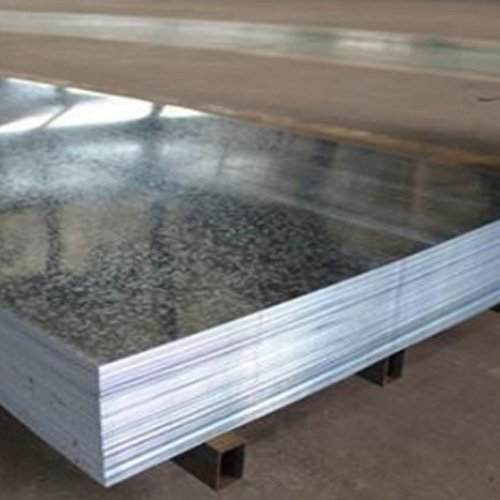
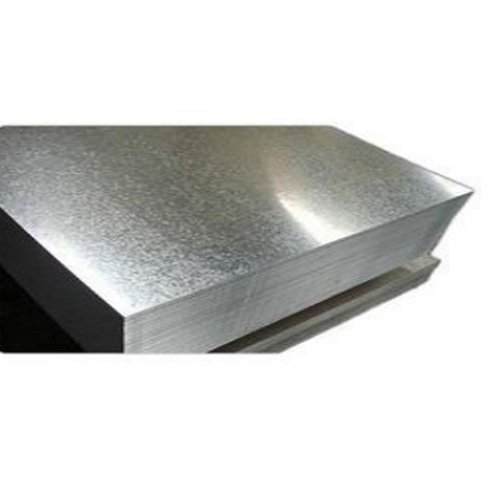
Galvanized Coil Manufacturer in Ahmedabad
Gadhpat Technofab Pvt Ltd is a trusted manufacturer of galvanized steel coils in Ahmedabad, Gujarat, India, supplying premium-quality coils designed for superior corrosion resistance, strength, and long service life. Manufactured from high-grade steel and using advanced galvanization processes, our coils meet the demanding requirements of the industrial, construction, roofing, and fabrication sectors.
As a manufacturer, we ensure consistent coating quality, accurate thickness, and reliable mechanical properties to support downstream processing and fabrication.
High-Quality Galvanized Steel Coils for Industrial Applications
Our galvanized coils feature a uniform zinc coating that provides excellent protection against rust and environmental exposure. With strict quality control at every stage, we deliver coils that offer durability, formability, and consistent performance across applications.
- Uniform zinc coating thickness
- Excellent corrosion and weather resistance
- High tensile strength and formability
- Smooth surface finish for fabrication
- Long-lasting performance with low maintenance
Process of Galvanizing
The process of galvanizing steel sheet was developed simultaneously in France and England in 1837. Both of these methods employed a ‘hot dipping’ process to coat steel sheet with zinc.
Galvanizing is carried out on cold-rolled sheets/cold-rolled strips. The galvanizing process is broadly divided into hot dipping and electro-galvanizing. The hot-dip process is more suitable for heavy coating weights, while electro-galvanizing is more suitable for lighter coating weights. For efficiency reasons, galvanizing cold-rolled strip is more common than galvanizing cold-rolled sheets.
- Hot-dip galvanizing – The process consists of immersing steel strips in molten zinc. The zinc used for galvanizing is high-grade, with a minimum zinc content of 99.95%. After passing through the pretreatment tanks for degreasing, pickling, and cleaning, the strip enters the annealing furnace and a pot containing molten zinc. The annealing furnace is used to apply the heat cycle required to achieve the target mechanical properties and to activate the surface with a reducing gas, which facilitates zinc coating on the strip surface. The coating weight is controlled by a purge gas jet directed at both surfaces of the strip from a nozzle above the pot to remove excess molten zinc. This process produces a relatively thick zinc coating that solidifies into a crystalline surface pattern known as spangles. During the process, a multilayered structure of iron-zinc alloys forms between the inner surface of the zinc coating and the steel strip.
- Electro-galvanizing – The principle of the process consists of immersion of a steel sheet in an electrolyte, a solution of zinc sulfate or cyanide. Electrolytic action deposits a coating of pure zinc on the surface of the iron or steel. The advantages of this process are that the coating thickness can be accurately controlled, whereas the limitation is that thick coatings, typically achieved by hot-dip galvanizing, are not feasible with this method.
A part of the GI steel production is corrugated to produce corrugated sheets (GC). Today, corrugation is produced by roll forming. This modern process is highly automated to achieve high productivity and low labor costs. In the corrugation process, sheets are pulled off large rolls and passed through rolling dies that form the corrugations. After passing through the rollers, the sheets are automatically sheared to the desired length. The standard corrugated shape is a round, wavy profile, but it can be easily modified to a variety of shapes and sizes by changing the dies.
The cross-section of a galvanized strip is composed of the steel substrate, iron-zinc alloy layers, and a zinc layer. Because the paint adhesion and weld ability of the surface of this zinc layer are not necessarily good, galvannealing has been developed to improve these properties. In the basic process for galvannealed strip, the zinc-coated strip emerges from the pot and is heated in a galvannealing furnace, forming an iron-zinc alloy layer by interdiffusion of the iron and zinc coating layers, so that the surface of the zinc layer also contains some iron. The galvannealing line is typically equipped with a skin-pass mill, a tension leveler, and chromating equipment, following the galvannealing furnace. GI sheets are produced in both annealed and full-hard conditions.
GI Sheet Specification
| THICKNESS : | 0.45 MM TO 3 MM |
| WIDTH : | 100 MM TO 1520 MM |
| LENGTH : | FULL SLIT /SLIT COIL/CUT TO LEN (CTL)/BLANKS |
| GRADE : | CQ,DQ,DDQ,EDD,IF,HIGH STRENGTH |
| COATING MASS : | 60 -550 GSM |
Applications of the GI Sheet
- Construction - Roofing, side walls, partitions, panels, valley gutters, louvers, false ceilings, partition walls and ducts, rolling shutters, highway bumpers, slotted angles, and paint-coated products
- Automobile sector - Car, bus, and truck bodies, undercarriage work, air and oil filters, fuel and oil tanks, exhaust pipes
- Other general uses - Ducting, drums/barrels, containers, thermal cladding, railway coaches, sign boards, hoardings, and road signs
Advantages of Using GI Sheets
- Low cost - Galvanizing is lower in first cost than many other commonly specified protective coatings for
- Less maintenance cost - GI sheets are virtually maintenance-free and last
- Long life - The life expectancy of GI sheets is quite high in rural, urban, and coastal areas
- Galvanizing is usually carried out in accordance with standards, and minimum coating thicknesses are specified. Coating life and performance are reliable and predictable.
- Complete protection - Every part of a galvanized iron sheet is protected.